
How Forestry Machinery Is Supporting Sustainable Forest Management in China

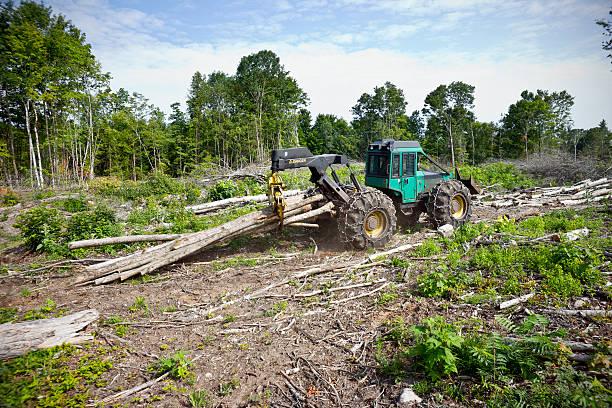
China's forestry sector plays a crucial role in environmental conservation, timber production, carbon sequestration, and rural economic development. As the country continues expanding afforestation programs and improving forest management practices, the demand for modern forestry machinery is steadily increasing. Advanced equipment is helping improve operational efficiency, reduce labor intensity, and support sustainable forest resource management across commercial plantations and natural forests.
According to a Vyansa Intelligence report, the China Forestry Machinery Market was valued at USD 1.11 Billion in 2025 and is projected to reach USD 1.62 Billion by 2032, growing at a CAGR of 5.55% during the 2026–2032 forecast period. The industry's steady expansion reflects increasing investments in mechanized forestry operations, technological advancements, and China's long-term commitment to sustainable forest development.
Mechanization Is Improving Forestry Operations
Traditional forestry activities often involve labor-intensive processes such as planting, thinning, harvesting, and transportation. As labor availability changes and operational efficiency becomes increasingly important, forestry operators are adopting advanced machinery to streamline field operations.
According to this forestry machinery industry report, mechanization is improving productivity across timber harvesting, forest maintenance, site preparation, and plantation management. Modern equipment enables operators to perform complex forestry tasks more efficiently while reducing manual workloads and improving workplace safety.
The adoption of specialized machinery is also helping forestry companies manage larger forest areas with greater operational consistency.
Afforestation Programs Continue to Drive Equipment Demand
China has implemented extensive afforestation and ecological restoration initiatives to increase forest coverage, combat land degradation, and strengthen environmental sustainability. These long-term programs require efficient machinery capable of supporting tree planting, land preparation, maintenance, and harvesting activities.
Industry analysis indicates that ongoing investments in large-scale reforestation projects continue creating demand for technologically advanced forestry equipment. Mechanized operations improve planting efficiency while helping forestry organizations manage extensive landscapes more effectively.
According to the Food and Agriculture Organization (FAO), sustainable forest management is essential for conserving forest ecosystems, improving biodiversity, supporting rural livelihoods, and ensuring the long-term availability of forest resources.
As afforestation efforts continue, equipment manufacturers are developing solutions tailored to diverse forest conditions and terrain.
Technology Is Transforming Modern Forestry
The integration of digital technologies is reshaping forestry operations throughout China. GPS guidance systems, remote monitoring, automation, artificial intelligence, and data-driven equipment management are improving operational precision while reducing downtime.
Detailed market insights suggest that smart forestry machinery enables operators to optimize harvesting routes, monitor equipment performance, and improve resource utilization. These innovations enhance productivity while supporting more sustainable forest management practices.
Advanced machine control systems also help reduce fuel consumption and improve overall operational efficiency.
Sustainability Is Encouraging Advanced Equipment Adoption
Sustainable forest management has become a national priority as China seeks to balance economic development with environmental conservation. Modern forestry machinery contributes to these objectives by improving harvesting precision, minimizing environmental disturbance, and supporting responsible forest utilization.
The latest market analysis highlights that increasing emphasis on sustainable forestry practices is encouraging investment in equipment designed to improve efficiency while reducing ecological impact. Mechanized solutions also support better compliance with modern forest management standards.
The focus on responsible resource management continues influencing equipment purchasing decisions throughout the industry.
Growing Timber Demand Supports Market Expansion
China remains one of the world's largest consumers of timber and wood-based products used across construction, furniture manufacturing, paper production, and industrial applications. Meeting this demand requires efficient harvesting and forest management operations supported by reliable machinery.
Research findings indicate that growing domestic timber requirements, combined with ongoing investments in commercial plantations, continue supporting demand for harvesting equipment, forwarders, skidders, chippers, and specialized forestry machinery.
As forestry operations become increasingly professionalized, equipment modernization is expected to remain a priority.
Innovation Is Expanding Equipment Capabilities
Manufacturers continue introducing forestry machines with improved fuel efficiency, enhanced operator comfort, greater automation, and advanced safety features. Hydraulic systems, intelligent controls, and predictive maintenance technologies are helping operators maximize machine availability while lowering operating costs.
The comprehensive report suggests that continuous product innovation will remain an important factor supporting industry development. Equipment designed for diverse terrain, varying forest conditions, and multiple harvesting applications enables forestry companies to improve operational flexibility and long-term productivity.
These technological advancements are strengthening the competitiveness of modern forestry equipment across China's expanding forestry sector.
Future Outlook
China's forestry machinery industry is expected to maintain steady growth as sustainable forest management, mechanization, and digital transformation continue reshaping forestry operations. Expanding afforestation initiatives, growing timber demand, and ongoing investments in smart equipment are expected to create favorable opportunities for machinery manufacturers throughout the forecast period.
The industry outlook indicates that advanced forestry machinery will continue playing a vital role in improving operational efficiency, supporting environmental conservation, and strengthening sustainable forest management across China. Continued innovation in automation, precision forestry, and equipment design will further accelerate industry development in the coming years.

 Arabic
 French
 Spanish
 Portuguese
 Deutsch
 Turkish
 Dutch
Dutch
 Italiano
 Russian
 Romaian
 Portuguese (Brazil)
 Greek
Greek