
Flood Protection and Network Modernization Are Expanding Water Pump Applications in Poland

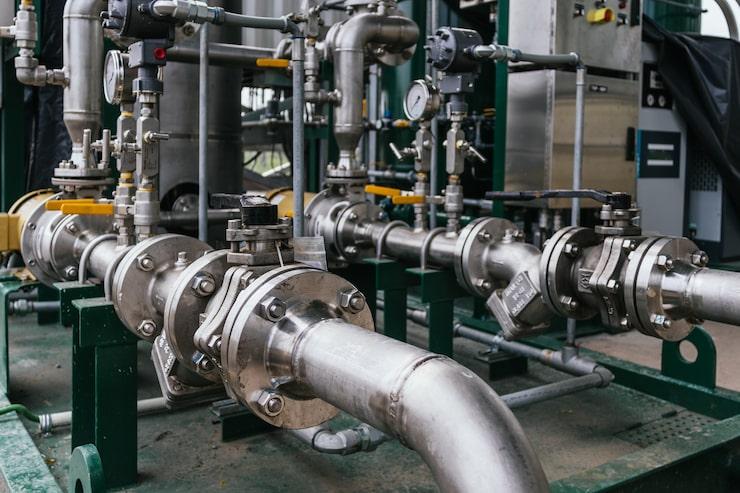
Poland’s water infrastructure is evolving as the country responds to flood risks, drought conditions, expanding municipal networks, industrial water requirements, and the need for more resilient water management. Pumps are essential across these applications, supporting drinking-water distribution, sewage transport, drainage, flood protection, agriculture, buildings, and industrial processes.
According to a Vyansa Intelligence report, the Poland water pump market was valued at USD 475 million in 2025 and is projected to reach USD 545 million by 2032, representing a 1.98% CAGR during 2026–2032.
Municipal Infrastructure Creates a Broad Pumping Base
Poland operates extensive water-supply and sewerage networks serving households, businesses, and public infrastructure. Pumps are needed to abstract water, transfer it toward treatment facilities, maintain distribution pressure, and move wastewater through collection and treatment systems.
Statistics Poland reported that the country’s sewerage network reached 190,800 kilometres at the end of 2025, after approximately 5,000 kilometres of newly built or reconstructed network were added during the year. The number of sewerage connections to residential buildings also increased.
For a Poland water pump market analysis, continued network development is important because additional infrastructure can create requirements for pumping stations, motors, controls, maintenance, and replacement equipment.
Flood Protection Is Increasing Infrastructure Requirements
Flood resilience has become particularly important following severe flooding in southwestern Poland. Państwowe Gospodarstwo Wodne Wody Polskie, the national water-management authority, reported that PLN 602.4 million had been allocated to address the consequences of the 2024 floods, covering 610 urgent intervention tasks.
For 2026, the authority announced more than PLN 1 billion for water-management infrastructure, including flood protection, retention, river restoration, and waterway modernization.
These detailed industry insights provide important context for pumps because drainage stations and other hydrotechnical infrastructure are essential parts of flood-management systems.
Pumping Stations Have a Direct Role in Climate Resilience
Poland’s recent infrastructure programs demonstrate that pump modernization is not simply an indirect consequence of wider water investment. Wody Polskie reported in 2025 that work had begun on the comprehensive modernization of the Modła III pumping station.
The authority also identified pumping stations as part of its integrated approach to flood protection alongside reservoirs and embankments. Modern pumping facilities were being developed at the Modła III polder and around Stargard.
This directly connects water pump industry development with Poland’s efforts to improve resilience against extreme hydrological events.
Drought Creates a Different Water-Management Challenge
Poland must manage both excess water and water scarcity. During dry periods, maintaining appropriate water levels and retaining available resources become increasingly important.
Water-management infrastructure can therefore require pumps capable of supporting transfers, irrigation, drainage management, and reservoir operations under changing conditions.
The ability to operate efficiently across different flow requirements is particularly valuable. Variable-speed drives can allow pumps to adjust output instead of continuously operating at maximum capacity.
Wastewater Systems Require Specialized Equipment
Wastewater pumps face operating conditions that differ substantially from conventional clean-water applications. Sewage can contain solids, fibres, abrasive particles, and other materials capable of creating blockages or accelerating component wear.
Equipment selection can therefore emphasize solids-handling capability, clog resistance, corrosion-resistant construction, and accessible maintenance.
As Poland expands and reconstructs sewerage infrastructure, dependable wastewater pumping becomes an important consideration for municipalities and treatment operators.
Energy Efficiency Can Reduce Long-Term Operating Costs
Water pumps can operate for thousands of hours annually, making electricity consumption an important component of total ownership cost.
High-efficiency motors, optimized hydraulics, variable-frequency drives, and correct pump sizing can reduce unnecessary energy consumption. A pump that is inexpensive to purchase but inefficient throughout its operating life may ultimately create higher overall expenditure.
The latest industry analysis therefore increasingly needs to evaluate lifecycle efficiency alongside equipment capacity and initial pricing.
Digital Monitoring Is Changing Maintenance Strategies
Sensors and connected control systems can provide operators with continuous information about pressure, flow, vibration, temperature, and electricity consumption.
This information makes it possible to identify unusual equipment behaviour earlier. Instead of relying entirely on fixed maintenance intervals or responding after breakdowns occur, operators can increasingly use condition data to plan interventions.
Remote monitoring can be especially useful for geographically dispersed municipal and flood-control pumping stations.
Industrial Applications Broaden Equipment Requirements
Poland’s manufacturing economy creates additional applications for water pumps across food processing, chemicals, machinery, energy, automotive production, and other industrial activities.
Pumps can support cooling, circulation, cleaning, process water, wastewater handling, and other fluid-transfer requirements. Different applications require different materials, pressure capabilities, temperature tolerances, and maintenance approaches.
For water pump market research, this industrial diversity broadens the addressable equipment base beyond municipal water management.
Agricultural Water Management Adds Another Demand Layer
Agriculture also depends on pumps where rainfall or gravity-fed irrigation cannot provide sufficient water. Surface pumps, submersible pumps, and other systems can move water from wells, reservoirs, and canals toward agricultural areas.
Changing precipitation patterns can make efficient irrigation increasingly important. Pump sizing, motor efficiency, automation, and integration with modern irrigation systems can help agricultural users manage available resources more precisely.
Lifecycle Services Can Become an Important Differentiator
Poland already has a substantial installed base of pumps across municipal networks, buildings, industry, agriculture, and hydrotechnical infrastructure.
These assets require inspections, spare parts, motor servicing, refurbishment, control upgrades, and eventual replacement. Suppliers capable of providing dependable aftermarket support can therefore address opportunities beyond new equipment installations.
For operators managing critical infrastructure, rapid access to technical service can be particularly valuable because prolonged pump downtime can interrupt essential water operations.
Resilient Pumping Will Support Poland’s Changing Water Needs
Poland’s water pump sector is increasingly influenced by municipal network development, flood protection, drought resilience, wastewater infrastructure, agriculture, and industrial requirements.
Recent public investment demonstrates that pumping stations remain directly relevant to the country’s water-security strategy. As infrastructure modernization continues, equipment capable of combining dependable hydraulic performance with energy efficiency, digital monitoring, intelligent controls, and accessible maintenance can play an increasingly important role in Poland’s water systems.

 Arabic
 French
 Spanish
 Portuguese
 Deutsch
 Turkish
 Dutch
Dutch
 Italiano
 Russian
 Romaian
 Portuguese (Brazil)
 Greek
Greek