
Reddy Anna Guide to Analysing Pitch Reports Before a Cricket Match

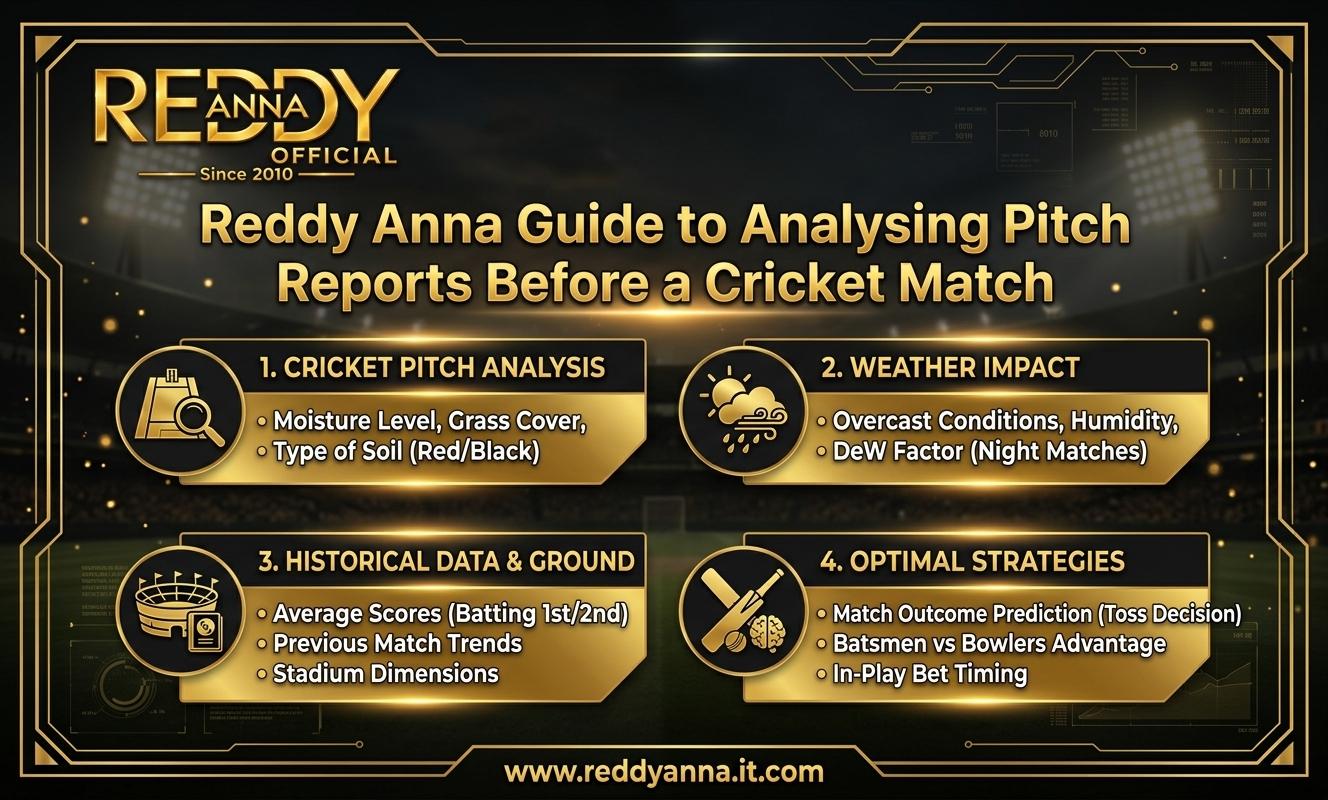
Understanding pitch conditions can help cricket followers make better sense of a match before it begins. This guide explains how to read pitch reports, identify important surface characteristics, and understand their possible influence on batting and bowling. For users exploring match information through Reddy Anna, learning these basics can provide useful context without relying on assumptions or predictions alone.
Why Are Pitch Reports Important Before a Cricket Match?
A pitch report describes the condition of the playing surface and offers clues about how it might behave during a match. Although it cannot determine the final result, it can help explain why teams choose particular strategies.
For example, a dry surface may offer opportunities for spin as the match progresses, while a pitch with grass could provide assistance to seam bowlers under suitable conditions. However, these effects depend on the venue, weather, soil composition, and match format.
Therefore, consider a pitch report alongside recent team performances, player availability, and other relevant information rather than treating it as a guarantee of what will happen.
What Should You Look for in a Cricket Pitch Report?
Before drawing conclusions, focus on a few important characteristics.
1. Grass Coverage
A layer of grass can help fast bowlers generate movement, particularly when the surface and atmospheric conditions support seam bowling. However, grass alone does not guarantee assistance for pace bowlers.
Check whether the report describes the grass as thick, patchy, or closely trimmed. These details can provide more context than simply labelling a pitch as a bowling surface.
2. Moisture and Surface Freshness
Moisture can influence how the ball behaves after pitching. In certain conditions, a slightly moist surface may assist seam movement. Nevertheless, the effect depends on how much moisture remains and how the pitch changes during the match.
A fresh surface may behave differently from one used in previous matches. Consequently, check whether the report mentions recent preparation, drying conditions, or visible wear.
3. Dryness, Cracks, and Wear
Dry pitches can sometimes help spinners, particularly when the surface begins to deteriorate. Cracks and rough patches may also create inconsistent bounce as a match progresses.
Still, not every dry pitch turns sharply. The soil type, surface preparation, and quality of the playing area all influence its behaviour.
4. Expected Bounce and Pace
Consistent bounce generally makes stroke play more predictable, whereas uneven bounce can create difficulties for batters. A surface with good pace may also allow attacking shots when the ball reaches the bat at a comfortable height.
Look for specific observations about bounce and carry instead of relying on broad descriptions such as a good batting pitch.
How Can Weather Conditions Affect Pitch Behaviour?
Weather is an important part of pitch analysis because surface conditions can change before and during a match.
-
Hot and dry weather: May dry the surface and contribute to wear over time.
-
Cloudy conditions: Can sometimes support swing bowling, although cloud cover alone does not guarantee swing.
-
Rain and humidity: May affect surface preparation, moisture levels, and playing conditions.
-
Dew during evening matches: Can make the ball harder to grip, potentially affecting bowlers, particularly spinners.
For a clearer assessment, compare the pitch report with the local forecast and the scheduled match time. Also, remember that weather affects the surface differently at different venues.
How Should You Use Pitch Reports Alongside Other Match Information?
A pitch report becomes more useful when you consider it with other reliable details. Start by checking the venue's recent match history, but avoid assuming that previous results will repeat under different conditions.
Next, consider the teams' playing styles. A side with effective spin bowlers may approach a turning surface differently from a team that relies mainly on pace. Similarly, a batting lineup's ability to handle movement and variable bounce can influence its approach.
If you use the app or review match information on the website, distinguish reported facts from opinions and predictions. Check that the source is Reddy Anna official before entering account details through a page linked to the service. Keep your Reddy Anna login credentials private, and never share your ID with unauthorised people. The name Reddy Anna pro should not, by itself, be treated as proof that a page or service is authentic.
Most importantly, avoid making decisions based on a single observation. Pitch reports provide context, not certainty, and responsible users should understand the risks involved in betting.
Frequently Asked Questions
1. How do you know whether a cricket pitch favours batting or bowling?
Look at reported bounce, pace, grass coverage, moisture, and surface wear. Combine these details with venue history rather than relying on one characteristic.
2. Does a dry pitch always favour spinners?
No. Dry surfaces can assist spin, but the amount of turn depends on soil composition, surface condition, preparation, and the bowler's skill.
3. Why is grass important in a pitch report?
Grass can influence seam movement and the ball's interaction with the surface. Its effect depends on the amount of grass and the surrounding playing conditions.
4. Can a pitch report predict the winner?
No. It provides information about possible playing conditions, but team performance, player form, tactics, and unexpected events also influence the result.
5. Should weather be checked alongside a pitch report?
Yes. Rain, humidity, temperature, and dew can influence surface conditions and how players handle the ball during a match.
Conclusion
Analysing a cricket pitch report involves more than identifying whether a surface appears suitable for batting or bowling. Grass coverage, moisture, dryness, bounce, weather, and venue history all contribute to a more balanced understanding. By checking these factors together and separating evidence from speculation, readers can interpret pre-match information more carefully. No report guarantees a particular outcome, so informed analysis and responsible decision-making should always remain the priority.

 Arabic
 French
 Spanish
 Portuguese
 Deutsch
 Turkish
 Dutch
Dutch
 Italiano
 Russian
 Romaian
 Portuguese (Brazil)
 Greek
Greek
